



Remember when grandma used to crack a window “to let the house breathe” even in the dead of winter? Turns out, she was onto something. While we’ve gotten much better at sealing our homes to keep energy bills down (goodbye, drafty windows!), we’ve also created a new challenge: trapped indoor air that can actually make us sick.
The irony is real—we seal up our homes to stay warm and save money, but then we’re breathing the same recycled air for months on end. It’s like being stuck in a car with someone who ate too much garlic. Eventually, you’ve got to crack a window.
Let’s talk about indoor air quality and how to keep your sealed winter home healthy, comfortable, and fresh without turning it into an icebox or watching your heating bills skyrocket.
Why Indoor Air Quality Matters More in Winter
Here’s something that might surprise you: the EPA estimates that indoor air can be 2-5 times more polluted than outdoor air. And in winter, when we seal everything up tight? That number can be even higher.
What’s lurking in your winter air?
- Carbon dioxide from people and pets breathing
- Volatile organic compounds (VOCs) from cleaning products, furniture, and paint
- Cooking fumes and odors
- Pet dander and dust mites
- Mold spores from moisture buildup
- Viruses and bacteria (hello, flu season!)
- Carbon monoxide from furnaces or fireplaces (yikes!)
When you combine all of this with zero fresh air exchange, you’re essentially marinating in a cocktail of pollutants. Delicious, right?
Signs your indoor air quality needs help:
- Stuffy, stale air that feels “heavy”
- Persistent odors that won’t go away
- Condensation on windows
- Increased allergy or asthma symptoms
- More frequent colds or respiratory issues
- Headaches or fatigue when you’re home
- Mold or mildew growth
If any of these sound familiar, your home is probably trying to tell you something.
The Ventilation Balancing Act
Here’s the challenge: you want fresh air, but you don’t want to lose all your expensive heated air in the process. It’s like trying to have your cake and eat it too—except the cake is warm air and eating it means opening windows in January.
The good news? There are smarter solutions than just cracking windows and cranking up the thermostat.
Simple Ventilation Solutions (No Major Investment Required)
1. Strategic Window Opening
Yes, opening windows works! But do it strategically:
- Open windows for 5-10 minutes daily when outdoor temps aren’t brutally cold
- Create cross-ventilation by opening windows on opposite sides of your home
- Do this during the warmest part of the day
- Close windows before your home loses significant heat
Cost: Free
Effectiveness: Moderate
Best for: Mild winter climates or homes without other ventilation options
2. Use Exhaust Fans Wisely
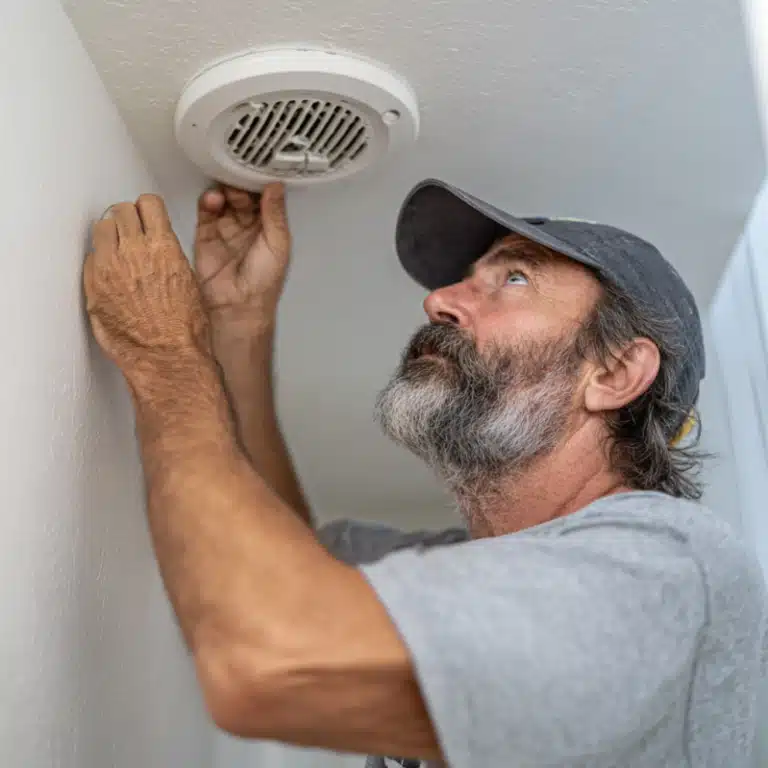
Those bathroom and kitchen exhaust fans aren’t just for covering up sounds or clearing steam—they’re powerful ventilation tools.
What to do:
- Run bathroom fans during and for 20 minutes after showers
- Use kitchen exhaust fans when cooking (especially when frying or using the oven)
- Make sure fans vent outside, not into your attic
- Clean fan grilles regularly for maximum efficiency
Important note: When you run exhaust fans, you’re pulling air out of your home. That air has to be replaced from somewhere—ideally through controlled fresh air intake, not through random cracks and gaps.
Cost: Already installed
Effectiveness: Good for moisture and localized pollutants
Maintenance required: Clean grilles yearly
3. Upgrade Your Furnace Filter
Your furnace filter is doing more work than you think. A quality filter captures dust, pollen, pet dander, and other particles before they circulate through your home.
Filter options:
- MERV 8: Basic filtration, captures larger particles
- MERV 11-13: Better filtration, captures smaller particles (recommended for most homes)
- HEPA filters: Maximum filtration, great for allergy sufferers (check if your system can handle them)
Pro tips:
- Change filters every 1-3 months during winter
- Higher MERV ratings = more restriction, so make sure your system can handle it
- Don’t just buy the cheapest filter—it’s a false economy
Cost: $15-$40 per filter
Effectiveness: Good for particle filtration
Frequency: Monthly during heavy use
4. Add Indoor Plants (The Natural Air Purifiers)
Plants don’t just look nice—they actually filter indoor air. NASA even studied this! While they won’t replace mechanical ventilation, they’re a helpful supplement.
Best air-purifying plants:
- Spider plants (nearly impossible to kill)
- Snake plants (tolerates low light)
- Pothos (great for beginners)
- Peace lilies (beautiful and effective)
- Boston ferns (loves humidity)
Bonus: Plants also add humidity to dry winter air, which is another win.
Cost: $10-$30 per plant
Effectiveness: Moderate supplementary benefit
Maintenance: Water when soil is dry
Advanced Ventilation Solutions (Worth the Investment)
5. Energy Recovery Ventilator (ERV)
Think of an ERV as the ultimate ventilation solution. It brings fresh air in and exhausts stale air out, but here’s the cool part—it transfers heat (and humidity) between the two air streams. You get fresh air without losing all your expensive heated air.
How it works:
- Stale indoor air passes through one side of a heat exchanger
- Fresh outdoor air passes through the other side
- Heat transfers from the warm stream to the cold stream
- You get fresh air that’s already been pre-warmed
Cost: $1,500-$4,000 installed
Effectiveness: Excellent—recovers 70-90% of heating energy
Best for: Newer, tightly sealed homes; anyone serious about air quality
Worth noting: ERVs also transfer moisture, which is great in dry winter climates where you want to retain some humidity.
6. Heat Recovery Ventilator (HRV)
HRVs are similar to ERVs but only transfer heat, not moisture. They’re ideal for climates with high humidity or for homes with moisture issues.
Differences from ERV:
- Transfers heat only (not humidity)
- Better for humid climates
- Helps reduce winter condensation problems
- Slightly less expensive than ERVs
Cost: $1,200-$3,500 installed
Effectiveness: Excellent for heat recovery
Best for: Humid winter climates; homes with condensation issues
7. Whole-House Air Purifier
These systems integrate with your HVAC to filter air throughout your entire home, not just one room.
Types available:
- HEPA filtration systems: Capture 99.97% of particles 0.3 microns or larger
- UV light systems: Kill bacteria, viruses, and mold spores
- Electronic air cleaners: Use electrical charges to capture particles
- Activated carbon filters: Remove odors and VOCs
Cost: $800-$2,500 installed
Effectiveness: Very good to excellent depending on system
Best for: Allergy sufferers; homes with pets; anyone wanting premium air quality
8. Bathroom and Kitchen Ventilation Upgrades
If your current exhaust fans are loud, weak, or don’t vent outside, upgrading them can make a huge difference.
What to look for:
- Quiet operation (1.0 sones or less)
- Adequate CFM rating for room size
- Humidity sensors (turns on automatically when moisture detected)
- Timer switches (keeps running after you leave)
- Energy Star certification
Cost: $150-$500 per fan installed
Effectiveness: Very good for moisture and odor control
ROI: Prevents mold, moisture damage, and odors
Creating Your Winter Ventilation Strategy
You don’t need to implement every solution on this list. The key is creating a strategy that works for your home, climate, and budget.
For tight budgets:
- Change furnace filters regularly with higher MERV ratings
- Use exhaust fans strategically
- Open windows briefly during milder days
- Add a few air-purifying plants
For moderate investments:
- Everything above, plus:
- Upgrade to quiet, efficient bathroom fans with timers
- Add a portable air purifier to main living areas
- Consider a smart thermostat with ventilation reminders
For comprehensive solutions:
- Install an ERV or HRV system
- Add whole-house air purification
- Upgrade all exhaust fans with humidity sensors
- Install fresh air intake vents
- Regular HVAC maintenance and duct cleaning
Don’t Forget Humidity Control
Dry winter air is more than just uncomfortable—it can worsen respiratory issues and make you more susceptible to viruses. But too much humidity creates mold problems.
The sweet spot: 30-50% relative humidity
How to achieve it:
- Use a whole-house humidifier (installed on your HVAC)
- Run portable humidifiers in bedrooms
- Don’t over-ventilate (which removes humidity)
- Monitor with a simple hygrometer ($10-$20)
Warning signs of too much humidity:
- Condensation on windows
- Musty odors
- Visible mold growth
Warning signs of too little humidity:
- Static electricity everywhere
- Dry skin and lips
- Aggravated asthma or allergies
- Cracking wood furniture
When to Call in the Professionals
Some ventilation improvements are simple DIY projects (changing filters, adding plants), but others definitely require professional help.
Call Cransten when you need:
- ERV or HRV system installation
- Whole-house air purifier integration
- Bathroom or kitchen fan replacement
- Ductwork inspection or cleaning
- Fresh air intake vent installation
- Assessment of your home’s ventilation needs
Our experienced team serves homeowners throughout Northern Utah, the Denver metro area, and communities across South Carolina and North Carolina. We’ll help you create a customized ventilation strategy that keeps your air fresh without breaking your budget.
Testing Your Indoor Air Quality
Curious about what’s actually in your home’s air? You have options:
DIY test kits: Available online for $100-$200, test for:
- Mold spores
- VOCs
- Radon
- Carbon monoxide
Professional testing: $300-$500, provides comprehensive analysis and recommendations
Smart monitors: $100-$300, continuously monitor:
- PM2.5 particles
- VOCs
- CO2 levels
- Humidity
- Temperature
Consider testing if you have persistent health symptoms, visible mold, or just want peace of mind about your air quality.
The Bottom Line on Winter Ventilation
Your sealed, energy-efficient home is great for your heating bills but can be terrible for your indoor air quality if you’re not actively managing ventilation. The good news? You have options at every budget level, from simple habit changes to sophisticated mechanical ventilation systems.
Start with the basics—change your filters, use your exhaust fans, and crack windows strategically. If you’re ready for a more comprehensive solution, ERV/HRV systems are game-changers for both air quality and energy efficiency.
Remember: Clean air isn’t a luxury—it’s essential for your health and comfort. Don’t spend the winter breathing stale, polluted air just to save a few bucks on heating.
Ready to Breathe Easier This Winter?
Whether you need help installing a whole-house ventilation system, upgrading exhaust fans, or just want professional advice on improving your home’s air quality, Cransten Handyman and Remodeling is here to help.
Contact Cransten today to schedule a consultation. Let’s create a ventilation solution that keeps your home comfortable, healthy, and energy-efficient all winter long.