


There’s something deeply satisfying about a great fence. It says, this is my yard, and I like it that way. It keeps the dog in, the neighbors’ dog out, and gives you a place to hang a string of lights without looking like you’re decorating a parking lot.
But fences do a lot more than define a boundary. A well-installed fence — or a properly repaired one — can meaningfully boost your property value, improve your curb appeal, and give you the backyard privacy you’ve been dreaming about since your neighbor started hosting Sunday afternoon drum circles.
Let’s break it down.
Why Fencing is One of the Smarter Home Investments You Can Make
Fencing isn’t usually the first thing people think about when they’re trying to increase property value. They go for kitchens, bathrooms, curb appeal plantings. But a quality fence does something those upgrades often don’t: it solves a problem and looks good doing it.
According to the National Association of Realtors, outdoor improvement projects — including fencing — consistently rank among the projects most likely to add value at resale. In markets where yard space matters, a well-maintained privacy fence can be a genuine differentiator. Buyers with kids, pets, or just a preference for not waving at their neighbors during their morning coffee tend to notice.
Beyond resale, there’s the daily quality-of-life win. Backyard privacy creates a space you’ll actually use. That patio furniture you bought with such optimism? A privacy fence is what makes you actually sit on it.
Choosing the Right Fence Material
Not all fences are created equal, and the right choice depends on your goals, your budget, and — let’s be honest — how much maintenance you’re willing to do. Contact our team if you’d like a recommendation based on your specific yard and goals.
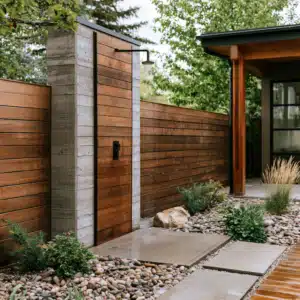
Wood Fences are the classic choice for good reason. They’re versatile, warm-looking, and can be stained or painted to match just about anything. A traditional wood privacy fence or a charming picket fence both offer solid curb appeal. The trade-off is that wood requires periodic maintenance — staining, sealing, and the occasional board replacement. But for homeowners who don’t mind a little upkeep, wood fences deliver a look that’s hard to beat.
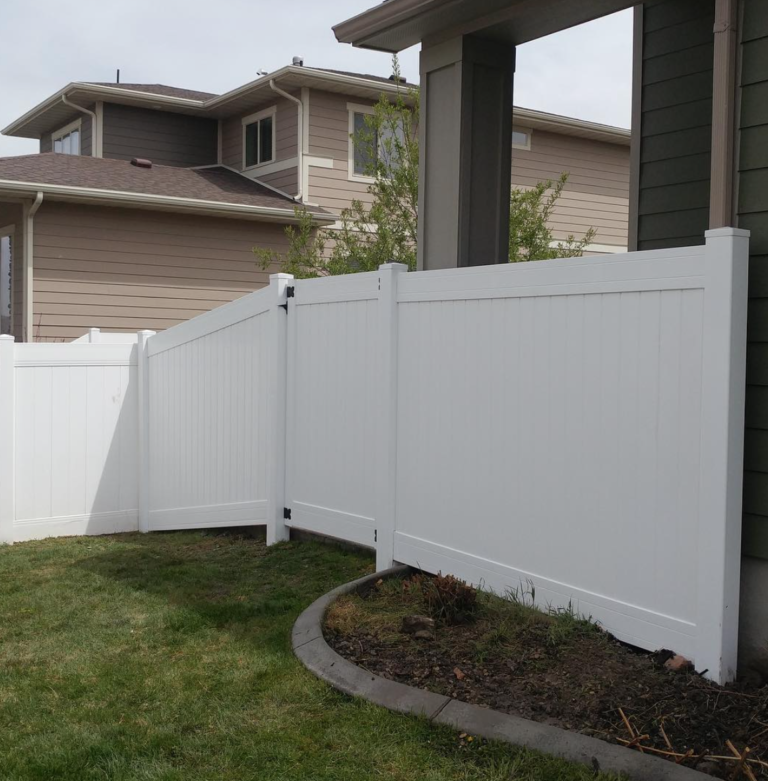
Vinyl Fences are the low-maintenance fan favorite. No painting, no staining, no warping — vinyl holds its shape and color for years with nothing more than the occasional rinse. It costs more upfront than wood, but over time, the savings in upkeep can make it the smarter investment. Vinyl works especially well for backyard privacy applications where you want clean, consistent panels without a lot of fuss.
Aluminum and Composite Fences round out the options. Aluminum is a great pick for decorative fencing or pool enclosures — it’s durable, rust-resistant, and looks sharp. Composite fencing (wood fibers combined with plastic) sits in a sweet spot between the look of wood and the durability of vinyl. Both are worth considering if you want something that will last and look great doing it. The American Fence Association is also a helpful resource if you want to dig deeper into material comparisons.
New Fence Installation: What to Expect
If you’re starting fresh, the process involves more than just pounding posts into the ground. (We mean that literally — post depth matters a lot, and getting it wrong means a fence that leans like it’s had a rough day at work.)
A proper residential fence installation starts with marking property lines — because installing a fence six inches onto your neighbor’s property is the kind of thing that ends friendships and starts very awkward HOA meetings. From there, it’s about setting posts at the right depth and spacing, making sure everything is level, and installing panels or pickets in a way that’s built to last.
Good fence contractors also know how to work around the things in your yard that make the job interesting: slopes, trees, gates, utility lines. It’s one of those projects that looks simple until you’re three posts in and realize the ground has other plans.
Fence Repair: Don’t Wait Until It Leans
Fence repair is one of those things homeowners tend to put off. A leaning post, a few rotting boards, a gate that won’t quite latch — none of it feels urgent until it suddenly very much does.
The good news: catching fence problems early almost always means a less expensive fix. A single rotting board or a loose post is a quick fence repair. A fence that’s been left to deteriorate for two or three seasons might be a full fence replacement conversation.
Common fence repairs include:
Post replacement. Posts are the structural backbone of any fence. When they rot at the base or get knocked loose, the whole fence suffers. Replacing a post correctly means digging out the old one, resetting it at the right depth with fresh concrete, and making sure everything is plumb before reattaching the panels.
Board and panel replacement. Wood boards crack, warp, and rot — especially the ones closest to the ground where moisture likes to hang out. Swapping out damaged boards keeps the fence looking sharp and prevents the damage from spreading.
Gate repair and adjustment. A gate that won’t close properly is both annoying and a security issue. Gate problems are often caused by sagging hinges, shifting posts, or a latch that’s seen better days. Most gate issues are fixable without a full replacement.
Leaning or shifting sections. If a section of your fence is starting to take a bow, it usually means the posts are failing. Let’s face it, unaddressed exterior deterioration — including failing fence structures — can affect homeowner coverage and property assessments. Catching it early is always the better call.
When to Call a Pro
Some fence projects are genuinely DIY-friendly, especially smaller repairs. But anything involving post setting, large installations, or structural issues is typically worth bringing in a professional. Fence installation done right is built to last a decade or more. Fence installation done wrong is a project you’ll be doing again in a couple of years.
At Cransten, we handle fence installation and repair across Northern Utah, the Denver area, South Carolina, and North Carolina. Whether you’re looking to install a brand-new privacy fence, repair a section that’s seen better days, or replace an aging fence entirely, our crew has the experience to do it right the first time.
Ready to finally do something about that fence? Get in touch with us today — or check out our full range of handyman and remodeling services at cransten.com. Your backyard (and your dog) will thank you.