




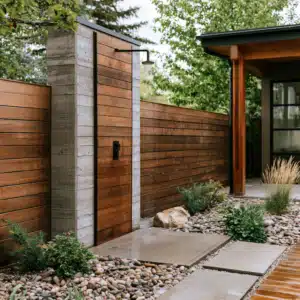
Your Yard Is Trying to Tell You Something (And It Involves Stone)
Picture this: you open the back door, step onto a rickety set of pavers that wobble like a game of Jenga, and think, “someone really should fix this.” That someone is you. Or more precisely, that someone is us — but you get the idea.
Hardscaping is the part of your yard that doesn’t involve dirt, plants, or the never-ending battle with weeds. Think of it as the permanent layer of your landscape — the walkways, retaining walls, patios, and stone features that create shape, usability, and something genuinely worth looking at. It’s similar to the bones of your yard. And just like the bones in your body, when they’re off, everything else feels off too.
The good news? A few well-planned hardscaping projects can completely transform the way your outdoor space looks, functions, and — let’s be honest — makes your neighbors a little jealous.
Walkways: Because Wandering Through Mud Isn’t Charming
A great walkway does two things: it gets you from Point A to Point B without incident, and it makes the journey feel intentional. A well-designed walkway is more than just a path — it’s a key landscape feature that improves curb appeal, day-to-day functionality, and can even increase your home’s value.
Material choices matter here. Natural stone and interlocking pavers are perennial favorites because they hold up well and look great doing it. Homeowners often combine two or more materials for contrast — a central paver path might be bordered with gravel for drainage and visual interest, or broken up with stepping stones and low ground cover to bring some green back into the design.
Width and slope matter too. A walkway that’s too narrow sends guests single-file to your front door like they’re boarding an airplane. Too steep without proper drainage and you’ve got a DIY water slide situation on your hands every time it rains. Getting the proportions right from the start saves a lot of headaches (and lawsuits, hypothetically speaking).
If you’re connecting your garage, back entrance, patio, or garden beds with a unified path system, that’s where things get really fun. These walkways create stronger connections between zones, making the entire outdoor space feel more complete rather than like a random collection of stuff you bought at a garden center.
Retaining Walls: The Hardest Working Feature in Your Yard
Retaining walls have had quite the glow-up. They used to be the utilitarian, “I just don’t want my hillside to slide into the neighbor’s yard” solution. Functional, sure. Glamorous, not really.
That’s changed. In 2025, retaining walls have emerged as essential architectural features — structures that provide structural support and a stylish edge. Instead of hiding behind plantings or fences, walls are highlighted with lighting, contrast materials, and seating. Your retaining wall can now do real landscaping heavy lifting while also being the visual backbone of the whole yard.
When carefully designed, a retaining wall isn’t just there to hold back earth — it becomes the visual backbone of the yard, unifying patios, walkways, and garden beds into a single, flowing layout.
On the practical side, proper drainage is non-negotiable. A minimum of 12-18 inches of stone backfill behind walls with drain tile to direct water away from the foundation is the standard recommendation — and it’s a detail that separates a wall that lasts decades from one that starts leaning awkwardly after the first hard winter. Also worth knowing: retaining walls over four feet typically require professional engineering and building permits. This is not the time to wing it with a YouTube tutorial.
Stone Features: The Personality of Your Outdoor Space
Walkways and retaining walls handle the structure. Stone features handle the soul.
Whether it’s a natural stone firepit surround, a decorative boulder grouping, flagstone steps leading to a garden, or a stacked stone accent wall, these features add texture and character that no amount of landscaping mulch can replicate. Stone can be stamped or shaped to mimic a variety of looks, making it a durable and relatively low-maintenance option that holds up to Utah winters, Carolina summers, and whatever Colorado decides to throw at it.
The key to stone features is integration. They should feel like they belong — like they grew up with the rest of your yard rather than being dropped in from a home improvement big-box store parking lot. That means matching materials, complementing colors, and thinking about sight lines from inside the house.
The “Please Don’t DIY This” Section
We’re big fans of homeownership pride around here. But hardscaping is one of those categories where good intentions and a rented plate compactor can get you into real trouble fast.
Between grading, drainage, material weight, and local building codes, there’s a lot that can go sideways before you’ve even laid the first stone. A settled walkway that heaves every spring, a retaining wall that tips because the drainage wasn’t right, or stepping stones that shift underfoot — these are the kinds of projects that look fine until they really, really don’t.
That’s where Cransten comes in. Our licensed pros handle hardscaping projects — with proper permits where required and the 90-day warranty that means we stand behind the work long after we’ve packed up and gone home.
Because your yard deserves better than a Pinterest fail. And so do you.
Ready to Get Started?
Whether you’re thinking about a simple stone walkway or a full hardscaping redesign with retaining walls and accent features, we’d love to take a look. Reach out to Cransten today and let’s talk about turning your outdoor space into something you actually want to spend time in.
Licensed pros, protected payments, and a 90-day warranty — so you can finally get your home done right.